
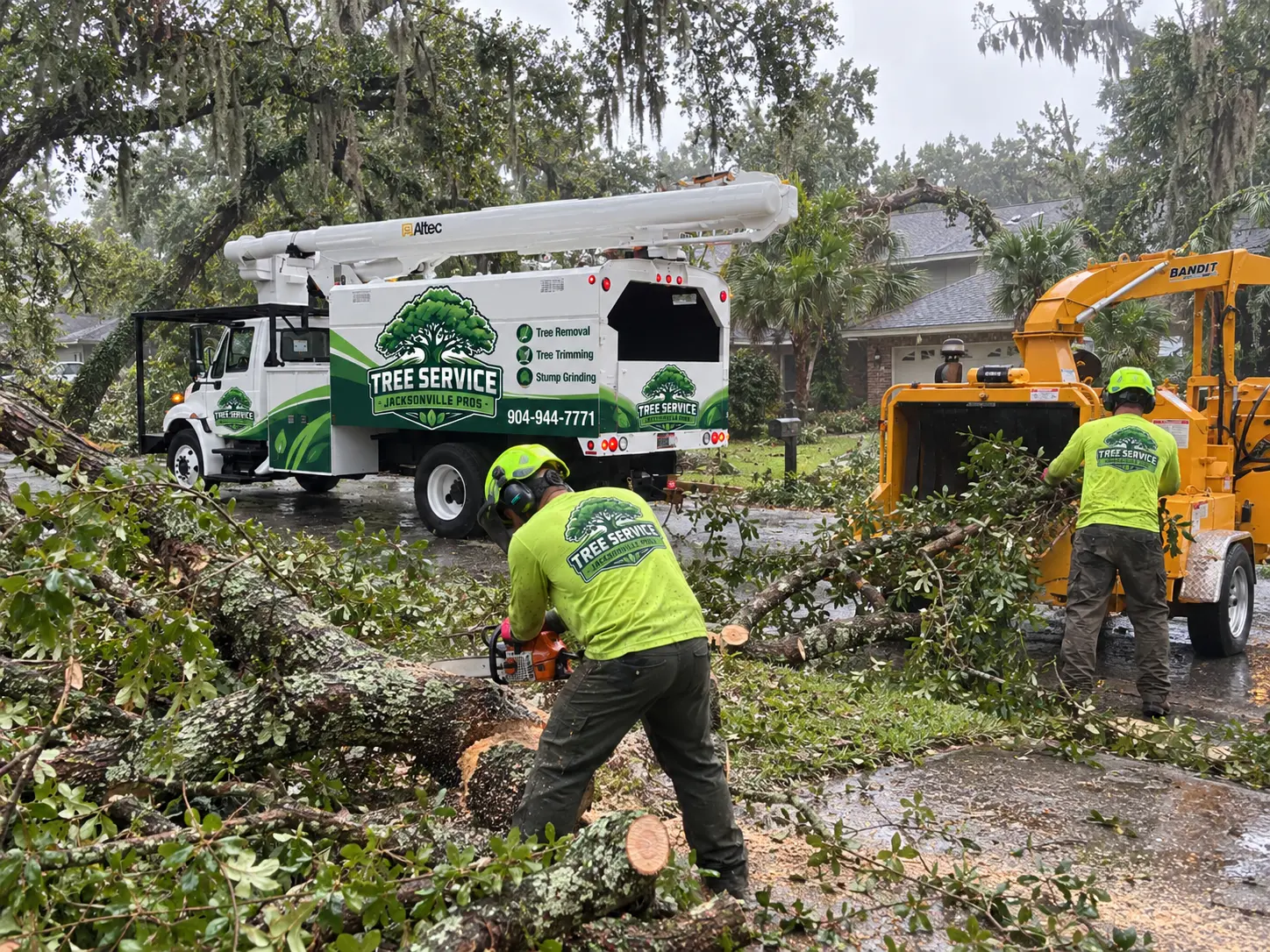
Severe thunderstorms and tropical systems regularly bring down trees and limbs across Northeast Florida. When one lands on your house, fence, or driveway, it's natural to want to start cleaning up immediately. Taking a few minutes to work through safety first can prevent injuries and make the rest of the process smoother.
Step 1: Immediate Safety
- Get everyone out of rooms where a tree has struck the house.
- Stay away from damaged areas until you know they're stable.
- Keep children and pets indoors or well away from fallen trees.
- If you smell gas, leave the home and call 911 and your gas provider.
Step 2: Treat Every Wire as Live
Downed lines may be energized even if the power is out. Trees in contact with wires can carry current. Stay at least 35 feet away, keep others back, and report it to JEA or your utility. Call 911 if there's immediate danger.
Step 3: Document the Damage
Before anything is moved, take photos and video from a safe distance: the tree, where it landed, the damage to the roof, fence, vehicles, and anything else. Note the date and time. This documentation is useful for any insurance conversation.
Step 4: Protect the Home — Only When It's Safe
If a tree has opened the roof and it's safe to do so, move valuables away from leaks and put out buckets or tarps indoors. Don't climb on a damaged roof or try to tarp it while the tree is still on it.
Step 5: Call a Tree Professional
Call when a tree is on a structure, blocking access, leaning toward the house, or when large limbs are hanging in the canopy. Our phone line is open 24/7 at 904-944-7771. Arrival times depend on conditions and demand after major storms.
Why You Shouldn't Chainsaw a Tension-Loaded Tree
A tree that has fallen against something is often bent and loaded with stored energy. Cutting the wrong piece can release that energy instantly, causing the trunk or a limb to spring, roll, or drop unpredictably. This is how many serious chainsaw injuries happen after storms. Leave anything large, bent, or resting on a structure to professionals.
Handling Small Fallen Branches
Small branches on the ground that aren't near wires and aren't under tension can usually be gathered safely. Wear gloves and sturdy shoes, and follow your city's storm debris instructions for curbside pickup.
Insurance Documentation Questions
- What does my policy cover for tree removal from a structure?
- Is removal covered if the tree fell but didn't hit anything?
- What documentation do you need?
- Do I need a written estimate or invoice from the tree service?
Safe Cleanup Considerations
Once hazards are handled, cleanup can begin: cutting and chipping debris, grinding stumps if needed, and checking remaining trees for damage you might not see from the ground.