Typical Storm Damage
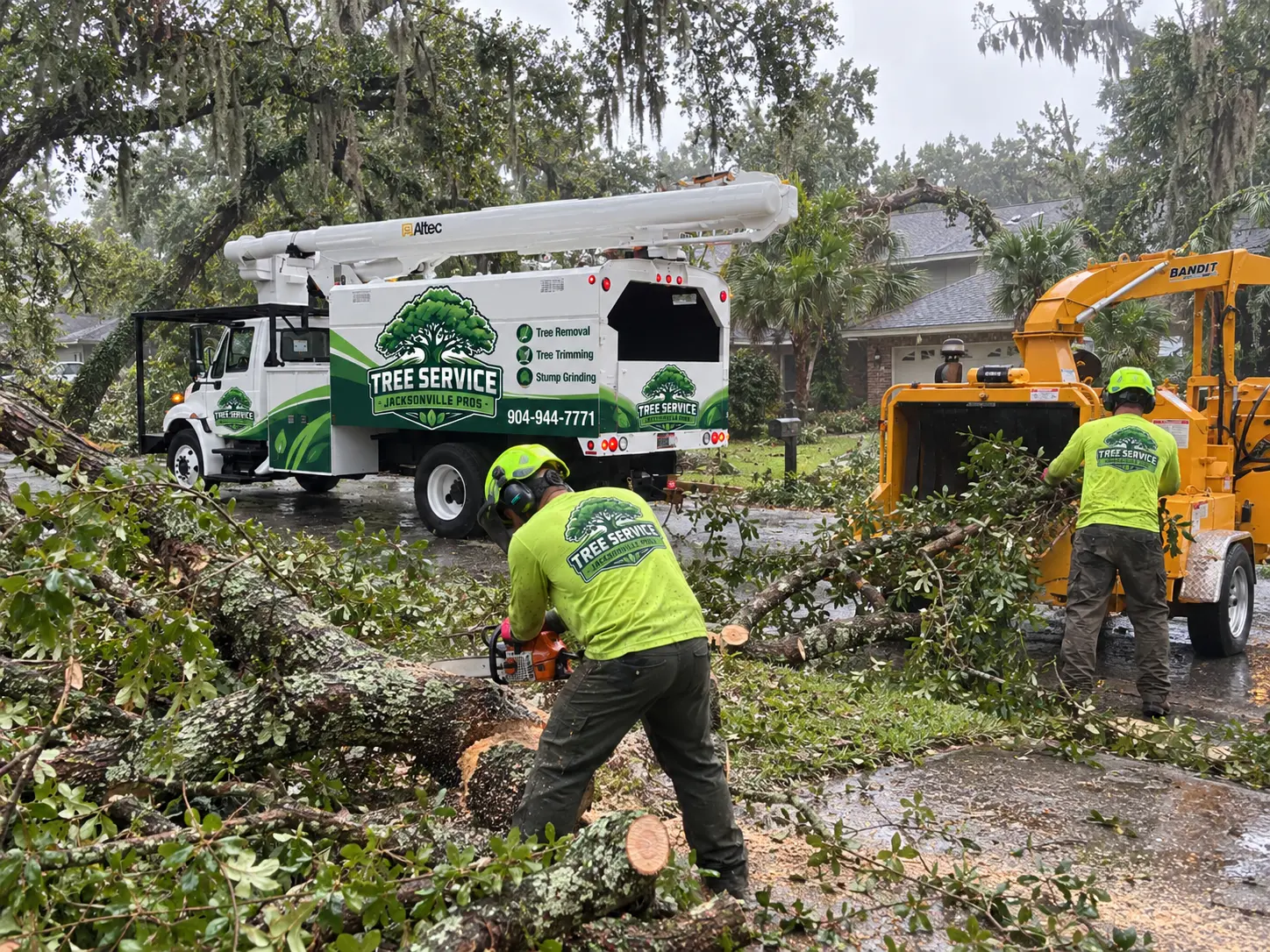
- Broken limbs lodged in the canopy
- Split trunks on multi-stem oaks
- Uprooted trees after soil became saturated
- Trees and limbs blocking driveways and sidewalks
- Scattered branches and palm fronds across the yard
- Debris on roofs, fences, and pool enclosures
Planning a Safe Cleanup
We begin by identifying what's still hazardous: hanging limbs, cracked trunks, and trees that have shifted. Those are dealt with first. Then fallen material is cut, chipped, and hauled. Remaining trees can be looked over for damage that might not be obvious from the ground.
Documentation for Insurance
If you plan to file a claim, take photos of the damage before cleanup starts, keep a copy of any estimate and invoice, and note the date the damage occurred. Your insurer decides what's covered; we can't promise approval, but we can provide a clear description of the work.
Limits During Unsafe Conditions
Crews don't work aloft during lightning or high winds. Immediately after a major storm there may be road closures and high demand. Calls involving occupied homes or blocked access get priority.
What Affects the Cost of Storm Damage Tree Cleanup
- Volume of debris
- Number of hazardous hangers or broken tops
- Whether trees are resting on structures
- Access and road conditions
- Hauling requirements
Want a feel for complexity before you call? Try our tree service cost calculator or read What to Do After a Storm Damages a Tree in Jacksonville.
Residential Property Considerations
Every quote starts with the property: what's under the tree, how equipment can reach it, and what you want left behind. Before your estimate, it helps to note gate widths, sprinkler heads, septic areas, and any wires near the tree, and to have your five-digit ZIP code ready when you call.