Arrival times depend on weather, road conditions, and how many calls come in after a storm, so we don't promise a specific time — but we will tell you honestly what to expect when you call.
Situations We Get Called About
- A tree or large limb on the roof
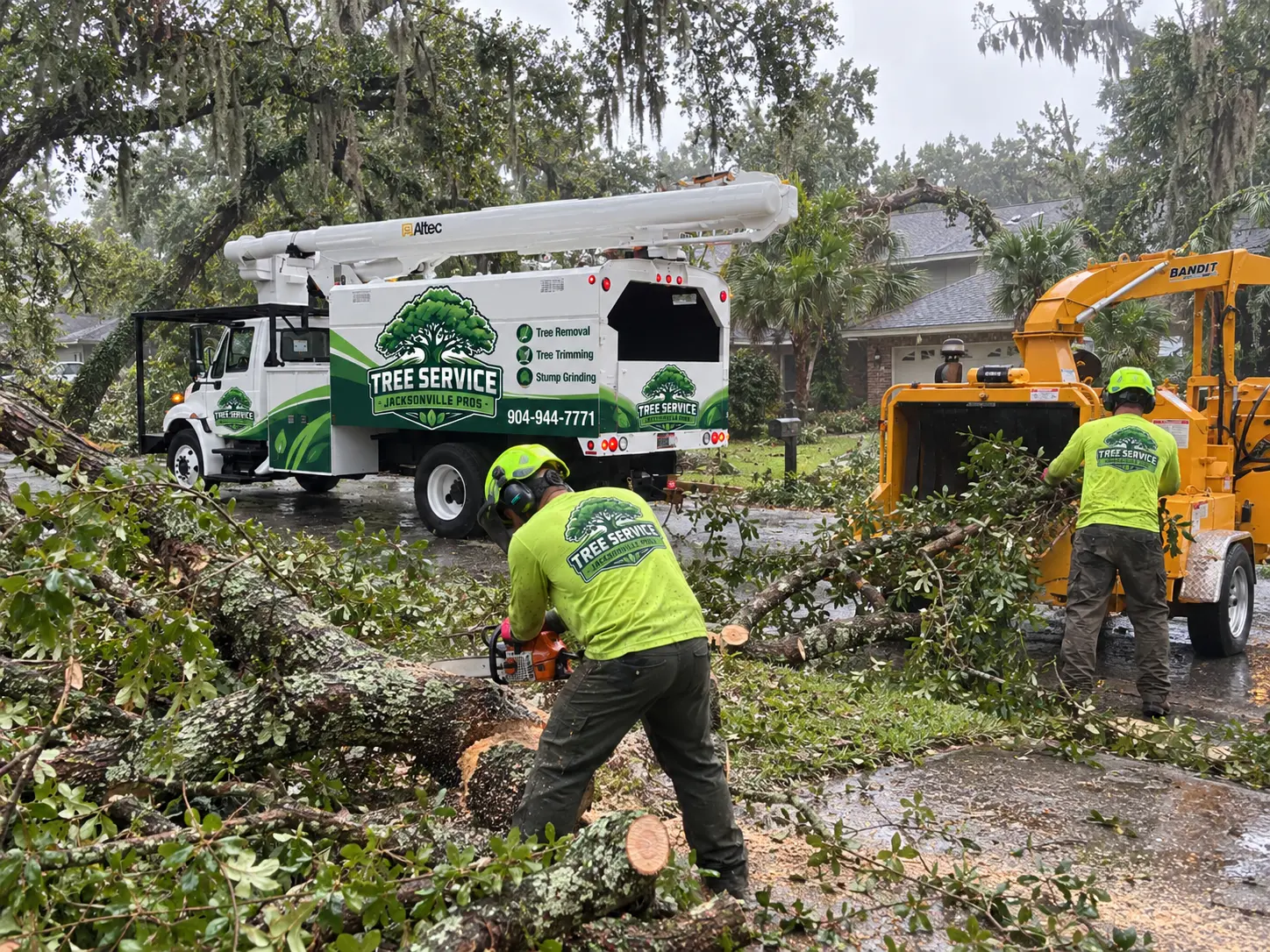
- A fallen tree blocking the driveway or garage
- A tree leaning toward the house after a storm
- Broken limbs hanging in the canopy (often called 'hangers')
- A tree down across a fence or pool enclosure
- A tree tangled with wires on the property
What To Do While You Wait
- Get people and pets away from the tree and out of any room it has struck.
- Stay well clear of any wires. Assume every downed line is energized and call JEA or your utility, or 911 if there's immediate danger.
- If a tree has penetrated the roof and it's safe, move valuables away from leaks.
- Take photos from a safe distance for your records and any insurance claim.
- Don't try to cut a fallen tree yourself. Trunks and limbs under tension can spring back with enormous force.
Why Fallen Trees Are Dangerous to Cut
A tree that has fallen against a house or another tree is often loaded like a spring. Cutting the wrong piece first can release that tension suddenly, sending the trunk or a limb in an unexpected direction. Assessing which parts are holding weight is a key part of emergency tree work, and it's why this job should be left to experienced crews with proper equipment.
Weather and Scheduling Limits
Crews can't safely work in high winds, lightning, or while a storm is still passing. After major weather events there may be a backlog. We prioritize situations involving occupied structures and blocked access, and we'll keep you updated.
What Affects the Cost of Emergency Tree Removal
- Tree size and how it fell
- Whether it is resting on a structure
- Equipment needed (crane, bucket truck, rigging)
- After-hours or storm-surge timing
- Debris volume
Want a feel for complexity before you call? Try our tree service cost calculator or read What to Do After a Storm Damages a Tree in Jacksonville.
Residential Property Considerations
Every quote starts with the property: what's under the tree, how equipment can reach it, and what you want left behind. Before your estimate, it helps to note gate widths, sprinkler heads, septic areas, and any wires near the tree, and to have your five-digit ZIP code ready when you call.